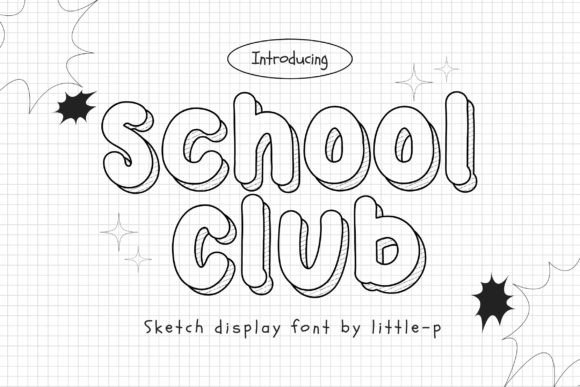
Bring Playful Depth to Your Branding with a 3D Sketch Typeface
We’ve all been there: staring at a blank canvas, trying to figure out how to inject some personality into a design without crossing the line into "unprofessional." Whether you are a freelancer building a portfolio, a small business owner creating packaging for a new product, or a teacher designing engaging worksheets, the struggle to find a font that is both fun and functional is real. You need something that captures attention, but you also need something that doesn't sacrifice readability for the sake of style. That is exactly where a specific niche of typography comes into play—the kind that mimics the tactile feel of hand-drawn art while maintaining the scalability of digital text.
If your project demands a bit of whimsy and a lot of character, you might want to look at School Club. This isn't just another standard typeface; it is a premium font designed to replicate the dynamic look of a 3D sketch. It brings a level of depth and texture that flat fonts simply cannot achieve, making it a powerful tool for anyone looking to stand out in a crowded market.
The Power of the 3D Sketch Aesthetic
Why does a "sketch" style work so well? It taps into a sense of authenticity and human touch. In an era dominated by sleek, minimalist sans serif fonts and rigid geometric shapes, a hand-drawn aesthetic feels approachable and warm. School Club takes this a step further by adding a 3D element. This isn't just a flat line drawing; the shading and perspective give the letters a physical presence, as if they were doodled in the margins of a notebook during a particularly inspiring lecture.
For branding, this is incredibly useful. Imagine a local bakery, a children’s tutoring center, or a creative agency targeting Gen Z. A rigid, corporate serif font might send the wrong message. However, a creative font like this signals that the brand is approachable, playful, and energetic. It suggests that the people behind the brand don't take themselves too seriously, which can be a massive relief to potential customers.
Practical Applications for Designers and Entrepreneurs
When we talk about modern typography, versatility is key. You don't want a font that only works on a birthday card. The beauty of the School Club typeface lies in its adaptability across different mediums. Here is how you can integrate this style into your workflow:
- Logo Design: If you are creating a logo for a brand that wants to feel youthful or educational, this font provides an instant identity. It works exceptionally well for mascots or logomarks where the text itself needs to be the focal point.
- Packaging Design: Think about product labels for snacks, art supplies, or craft kits. The 3D sketch style pops off the shelf, drawing the eye in a way that standard serif fonts might not. It communicates fun immediately.
- Social Media Graphics: On platforms like Instagram or TikTok, you have about two seconds to stop a user from scrolling. Bold, textured typography creates a visual "thumb-stopping" effect. Use it for headers, call-to-action buttons, or highlight covers.
- Merchandise: T-shirts, tote bags, and mugs thrive on novelty. A handwritten font with a 3D twist makes for great merchandise because it looks like custom artwork rather than generic text.
- Editorial and Posters: While you wouldn't use this for body copy in a newspaper, it is perfect for pull quotes, magazine headlines, or event posters. It sets a mood instantly, allowing the rest of the layout to be more conservative.
Matching Typography to Project Goals
One of the most common mistakes in web design and print layout is choosing a font based solely on personal taste rather than project objectives. Typography is a silent ambassador for your brand. Before you commit to a display font like School Club, ask yourself what the primary goal of the communication is.
If the goal is to convey authority and stability, a traditional serif might be better. However, if the goal is to foster community, encourage learning through play, or highlight a DIY spirit, then a sketch-based typeface is the right choice. It creates an emotional connection with the viewer. We associate sketching with brainstorming, ideas in progress, and creativity. By using this style, you are inviting your audience into a creative space.
Navigating Font Pairings and Readability
No font is an island. Even the most premium font needs a supporting cast to create a cohesive brand identity. Because School Club is a display font with high visual noise (due to the 3D shading), it is best used for headlines and short bursts of text. It is generally not suitable for long paragraphs or body copy, as the intricate details can make reading difficult at smaller sizes.
The best practice for font pairing here is contrast. You want to pair the expressive, hand-drawn nature of the School Club font with something clean and neutral. Consider pairing it with:
- A Clean Sans Serif: Fonts like Helvetica, Roboto, or Open Sans provide a quiet backdrop that allows the 3D sketch style to shine without competing for attention.
- A Simple Serif: If you are going for a "back-to-school" vintage vibe, a classic serif font like Georgia or Garamond can add a touch of traditional academic structure.
Always test your pairings at the intended size. What looks like a cool detail on a 27-inch monitor might turn into a muddy blob on a mobile screen. Ensure that the kerning (spacing between letters) is set correctly to maintain legibility, especially if you are using this for marketing assets where clarity is crucial for conversion.
Commercial Use and Licensing Considerations
For the entrepreneurs and small business owners reading this, the legal side of design assets is just as important as the aesthetic side. When you download a commercial font, you are usually paying for a license that dictates how you can use it. This is a critical aspect of professional design that is often overlooked by hobbyists.
Before using School Club for a client project or a product you intend to sell, verify the license. Most premium fonts allow for commercial use, but there are nuances. Does the license cover unlimited prints? Can you use it in digital products like Canva templates that you resell? Is it cleared for web embedding?
Using a font correctly ensures that your brand identity remains professional and legally sound. It also supports the type designers who put hours into creating these intricate 3D sketches. Treating typography as a professional asset rather than a free commodity elevates the standard of your work and protects your business down the line.
Injecting Energy into Educational and DIY Projects
While we have discussed commercial applications, let's not forget the roots of this style. The name "School Club" evokes nostalgia, creativity, and the tactile nature of school life. This makes it an incredible asset for educators, parents, and crafters.
If you are creating instructional materials, a font like this can make dry information feel more accessible. It breaks down the barrier between "official document" and "fun activity." For DIY craft projects—think scrapbooking, custom planners, or party invitations—this font adds a level of polish that standard computer fonts lack. It gives your handmade items a professional finish while retaining that handmade charm.
Furthermore, for personalizing names or creating custom gifts, the sketch style offers a unique texture. It suggests that the item was custom-drawn for the recipient, adding sentimental value to the gift.
Final Thoughts on Visual Consistency
Visual consistency is the backbone of good design. When you use a distinct typeface like School Club across your various touchpoints—from your website headers to your packaging stickers—you create a recognizable visual language. Your audience begins to associate that specific style with your brand.
However, consistency doesn't mean rigidity. You can use different weights or styles within the font family to create hierarchy. Use the boldest style for the main headline, and a lighter, cleaner style for subheadings. This creates a cohesive look that guides the viewer's eye naturally through the content.
Ultimately, the goal of any design asset is to communicate a message effectively. Whether you are selling a product, teaching a concept, or just sharing a piece of art, the typography you choose is the voice of that message. School Club offers a voice that is energetic, confident, and undeniably creative. It’s a reminder that design doesn't always have to be serious; sometimes, the best connections are made when we embrace the playful spirit of our work.