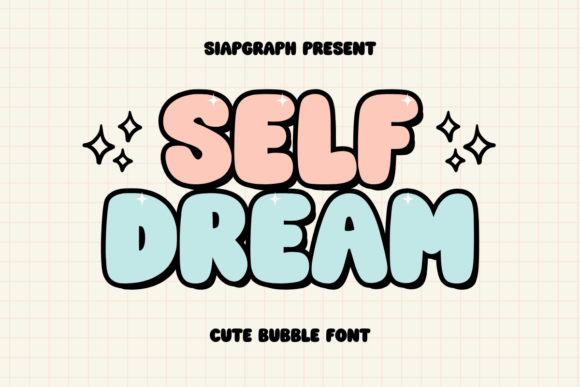
Self Dream: A Bubble Font That Brings Playful Ideas to Life
There's a specific feeling you get when you stumble upon a design element that just clicks. It's not about following a trend or picking something because it's popular; it's about finding a piece that resonates with the core of your project. For many creators, that moment of connection often happens with typography. A font can set the entire mood, communicate a brand's personality in an instant, and make a design feel complete. If your work leans toward the joyful, the approachable, and the whimsically modern, a typeface like Self Dream might be that missing piece you've been searching for.
The Visual Character of a Dreamy Typeface
At its heart, Self Dream is a display font with a distinct personality. It's categorized as a bubble font, which immediately tells you something about its form: soft, rounded edges, generous curves, and a generally bold, confident presence. But what sets it apart is its balance. It manages to be both cute and professional, playful without being childish. This is a crucial distinction for designers and business owners who need to appeal to a wide audience—think young parents, wellness brands, creative educators, or boutique food companies. The letterforms have a gentle, inflated quality that feels friendly and inviting, making it an excellent choice for projects where you want to create an immediate emotional connection.
Unlike a stark sans serif font or a traditional serif font, Self Dream occupies a unique space. It’s more structured than a casual script font or handwritten font, yet it carries far more warmth and personality than most geometric typefaces. This makes it a versatile creative font for headlines, logos, and any text element that needs to stand out and convey a specific, cheerful tone. Its readability at larger sizes is a key strength, ensuring your message isn't lost in its decorative style.
From Brand Identity to Social Media Feeds
So, where does a font like Self Dream actually shine? The applications are surprisingly broad, and thinking about them in concrete terms can help you decide if it's the right fit for your toolkit.
For branding and logo design, this typeface can become the cornerstone of a brand's visual identity. Imagine a children's bookstore, a bakery specializing in whimsical cakes, or a mobile app for mindfulness. Using Self Dream for the primary wordmark instantly communicates a sense of fun, safety, and creativity. It helps with brand recognition because its unique shape is memorable. Paired with a clean, simple sans serif for body text, it creates a hierarchy that is both professional and engaging.
In packaging design, shelf appeal is everything. A product wrapped in typography that feels approachable and high-quality has an advantage. Self Dream could be perfect for product names on organic snacks, craft supplies, or boutique cosmetics. It adds a layer of perceived care and personality that can influence a purchase decision. Similarly, for merchandise like tote bags, mugs, or t-shirts, the font’s bold, graphic nature translates beautifully to print, creating items people are excited to use and show off.
The digital realm is where this font truly thrives. Social media graphics need to stop the scroll. A quote card, a sale announcement, or a new product launch graphic set in Self Dream will grab attention far more effectively than standard text. Its bold appearance ensures clarity even on small screens. For websites and blogs, consider using it for hero section headlines, section titles, or special call-to-action buttons. It can break the monotony of standard web fonts and inject personality into your site's web design, improving audience engagement by making the browsing experience more enjoyable.
Making It Work: Practical Tips for Implementation
Finding a great premium font is one thing; using it effectively is another. Here’s some practical advice for integrating a character-rich typeface like Self Dream into your projects.
First, test your font pairings rigorously. Self Dream is a star player, but it needs a supporting cast. It almost always pairs best with a neutral, highly legible companion. A classic sans serif like Lato, Open Sans, or a simple serif like Lora can provide the necessary contrast for body copy. Avoid pairing it with other decorative fonts, which can create visual chaos. The goal is visual consistency and a clear hierarchy that guides the viewer's eye.
Second, consider readability in context. While Self Dream is designed for clarity at display sizes, it's not meant for long paragraphs of body text. Use it for short, impactful phrases: headlines, subheads, logos, and pull quotes. For longer text on websites or in print materials like brochures, always revert to your chosen, more neutral body font. This ensures your professional presentation is maintained across all touchpoints.
Third, review the full character set and styles. Many high-quality fonts, including well-crafted display fonts, come with additional features like alternates, ligatures, or stylistic sets. These can offer subtle variations in letters like 'a', 'g', or 'y', allowing you to customize the look further and avoid repetition in headlines. Exploring these options is part of the creative process.
Finally, understand the licensing. This is a critical, often overlooked step. If you're using the font for commercial work—client projects, products for sale, or marketing materials—you must ensure you have the correct commercial font license. Check the terms provided with the font files. Using a font outside its license can lead to legal issues, so this due diligence is non-negotiable for any serious designer or business owner.
A Tool for Expressive Communication
Ultimately, choosing a typeface like Self Dream is about aligning your visual language with your message. It’s a tool for expressive typography that goes beyond mere words. Whether you're designing an invitation for a child's birthday party, creating digital products like printable wall art, or crafting the editorial design for a lifestyle magazine's feature spread, the right font elevates the content. It adds a layer of meaning and emotion that plain text cannot achieve.
In a world saturated with content, the details matter. The thoughtful selection of a typeface is one of those details that can make your work feel more polished, more intentional, and more connected to your audience. It’s not about being the loudest, but about being the most authentic. A font that feels like a natural extension of your idea can be the bridge between a concept and a compelling, cohesive design that truly resonates.