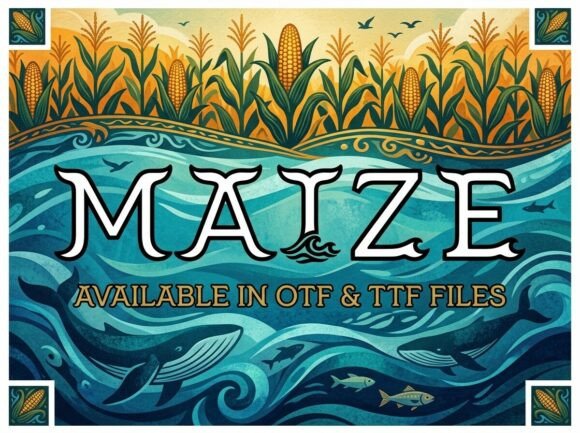
Maize: Where Majestic Serifs Meet the Soul of the Sea
There are typefaces that simply sit on the page, and then there are those that arrive with the force of a tide. Maize belongs firmly in the latter category. This isn't just another premium font; it's a piece of visual storytelling, a sophisticated display serif that carries the deep, rhythmic pulse of the ocean in every letterform. For anyone building a brand, crafting a logo, or designing a layout that needs to feel both luxurious and deeply connected to nature, understanding this typeface is like discovering a new current—one that can pull your entire project into a realm of fluid elegance.
A Typeface with a Maritime Heart
At first glance, Maize commands attention with its sharp, high-contrast serifs—a hallmark of classic display typography. But look closer, and you’ll see its true character. The terminals of its letters don’t just end; they flow and curl like the graceful arc of a whale’s tail breaking the surface. The serifs themselves have a subtle, hand-drawn quality, reminiscent of waves crashing against a shore before receding into the sand. This unique combination gives the font a "majestic-and-maritime" soul. It feels structured and authoritative, yet simultaneously organic and alive. The balanced structural weight ensures it remains highly legible at large sizes, making it a powerful tool for headlines and logos where impact is non-negotiable.
This isn't a font for small body text. Its personality shines brightest when it has room to breathe. Think of it as the anchor of your design system—the element that sets a distinct, coastal tone that other elements can harmonize with. Its oceanic personality makes it a natural fit for projects that aim to evoke a sense of calm sophistication, adventurous spirit, or premium natural beauty.
Practical Applications: From Brand Identity to Social Waves
The true test of a creative font is how it performs in the real world. Maize’s design makes it exceptionally versatile for a range of commercial and creative projects, particularly those within specific niches. Its character helps solve a common branding challenge: how to stand out in a crowded market with a visual identity that feels both professional and profoundly thematic.
- Branding & Logo Design: This is where Maize truly excels. For an independent marine conservation organization, a logo set in Maize immediately communicates mission, elegance, and a deep respect for the ocean. For a luxury seafood restaurant or a high-end coastal resort, it conveys quality, experience, and a serene atmosphere. The font does much of the heavy lifting in establishing brand recognition.
- Editorial & Packaging Design: Imagine the masthead of a travel magazine focused on coastal living, or the title on the packaging of a sustainable seafood brand. Maize provides a level of visual consistency and professional presentation that elevates the entire product. It turns packaging into a story and editorial layouts into immersive experiences.
- Digital Presence & Marketing Assets: In the fast-scrolling world of social media, a header image or key graphic set in Maize can stop a user in their tracks. Its high-impact, "serene-and-sea-swept" quality is perfect for Instagram posts, Pinterest pins, or website hero sections. It helps create a cohesive look across all digital touchpoints, reinforcing brand identity with every piece of content.
- Print & Merchandise: From posters for a local sailing event to invitations for a seaside wedding, or even merchandise like tote bags and apparel for a surf brand, this typeface translates beautifully to physical items. The hand-drawn details add a tactile, artisanal feel that resonates in print.
Pairing for Depth: Building a Complete Visual Language
A display serif like Maize is a star player, but it needs a supporting cast to build a complete and readable design system. The key is to choose complementary fonts that don’t compete with its strong personality but instead provide balance and clarity.
For body copy or secondary information, pair Maize with a clean, modern sans-serif font. A geometric sans-serif offers a crisp, contemporary contrast that lets the serif headlines pop. Alternatively, a humanist sans-serif can provide a softer, more approachable feel that echoes the organic curves in Maize’s design. Avoid pairing it with another strong display font or an overly decorative script, as this will create visual clutter and harm readability.
When testing font pairings, always check how they work together at the actual sizes you’ll use. Does the sans-serif body text remain easy to read next to the bold Maize headline? Does the overall typographic hierarchy feel clear? A good pairing should guide the reader’s eye effortlessly from the headline to the supporting text, improving both engagement and comprehension.
Considerations Before You Dive In
While Maize is a powerful asset, using it effectively requires some forethought. Its strength is in its display nature, so reserve it for headlines, logos, subheadings, and short, impactful text passages. Using it for paragraphs would quickly become tiring for readers.
Always review the full character set and any included font styles (like bold or italic) to ensure it has all the glyphs you need for your project, including any special characters or language support. Furthermore, for any commercial project—whether it’s a client logo, a product you sell, or a monetized blog—verifying the commercial license is a non-negotiable step. This ensures your use is fully legal and professional, protecting both you and your client.
Ultimately, choosing a typeface like Maize is about matching typography to project goals. If your goal is to communicate luxury, connection to the sea, natural beauty, or a serene yet powerful presence, then this typeface offers a unique and compelling solution. It’s more than just a design asset; it’s a storyteller in its own right, waiting to bring the fluid elegance of the ocean into your next creative endeavor.