String Light: The Font That Brings Warmth to Your Brand
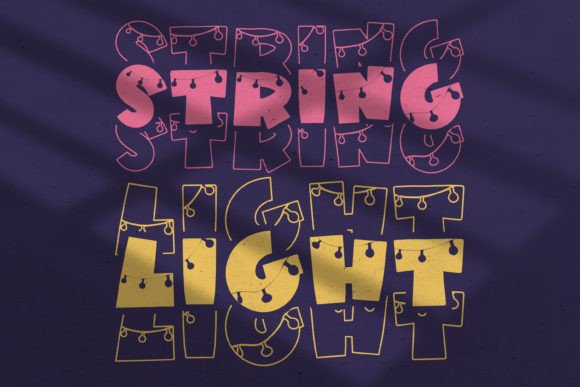
There's a certain magic that happens when you stumble upon a typeface that just feels right. It's not about technical perfection or trendy aesthetics—it's about that gut-level connection where the letters seem to breathe personality into whatever they touch. String Light is that kind of font. It carries a warmth and casual elegance that can transform a flat design into something with genuine emotional resonance, and honestly, that's harder to find than most people realize.
What Makes This Typeface Stand Out
String Light belongs to the handwritten font family, but it doesn't veer into that overly casual territory where legibility falls apart. The letterforms have a relaxed, organic quality—think of the way someone with naturally beautiful handwriting might jot down a note. There's intention behind each curve and stroke, yet nothing feels rigid or mechanical. The spacing feels natural, the weight is balanced, and the overall rhythm of the typeface creates a visual flow that guides the eye without demanding effort.
What really sets it apart from other script fonts is its versatility. Plenty of handwritten typefaces look gorgeous in isolation but fall apart the moment you try to use them in a real-world context. String Light manages to maintain its charm across different sizes, backgrounds, and applications. At larger display sizes, you get to appreciate the subtle details in each character. Scaled down for body text or smaller labels, it remains surprisingly readable—a quality that matters more than most people give it credit for.
Where String Light Truly Shines
Let's talk about practical applications, because a beautiful font means nothing if it doesn't serve your actual projects. For brand identity work, String Light offers something genuinely valuable: it communicates approachability without sacrificing professionalism. If you're building a brand for a boutique bakery, a wellness studio, a handmade jewelry line, or even a creative consultancy, this typeface signals that there's a real human behind the business. That warmth translates directly into trust, and trust is the foundation of every successful brand.
In logo design, the font works beautifully as a primary wordmark or as a complementary element paired with a cleaner sans serif. Imagine a coffee roaster's logo where "Roast & Co." sits in String Light above a simple geometric icon. The handwritten quality tells a story about craftsmanship before anyone reads a single word of copy. That's the power of thoughtful typeface selection—it does marketing work silently.
For packaging design, String Light brings an artisan quality that premium and small-batch brands desperately need. Whether you're designing labels for candles, wine bottles, skincare products, or gourmet foods, the font communicates handcrafted care. It works especially well on kraft paper, textured stocks, and natural materials where the organic letterforms complement the tactile experience of the packaging itself.
Social media is another arena where this creative font earns its keep. Instagram posts, Pinterest graphics, Facebook headers, and TikTok thumbnails all benefit from typography that stops the scroll. String Light has enough personality to catch attention but enough restraint to let your message come through clearly. Use it for quotes, announcements, sale graphics, or story overlays—it adapts to each context without losing its character.
Pairing and Practical Considerations
One of the most common mistakes I see in design is treating a font like a standalone hero. Typography works best as a system, and String Light is no exception. It pairs exceptionally well with clean sans serif fonts—think Montserrat, Open Sans, or Lato. The contrast between the organic handwritten style and a geometric sans serif creates visual hierarchy that feels balanced and intentional. For editorial layouts or blog graphics, try using String Light for pull quotes or section headers while letting a neutral serif handle the body copy.
When you're working on web design projects, keep readability front and center. String Light performs admirably at medium to large sizes on screen, but for extended paragraphs or small UI text, you'll want to reserve it for headings and accent elements. Test it across devices and screen sizes before committing. What looks elegant on a 27-inch monitor might lose clarity on a smartphone screen if you push it too small.
For print materials—posters, flyers, invitations, business cards—the font really comes alive. There's something about seeing handwritten-style letterpress or foil-stamped on thick cotton stock that digital screens simply can't replicate. If you're designing wedding invitations, event programs, or promotional posters, String Light adds that personal, celebratory touch that makes recipients feel like the piece was created just for them.
Before you commit to any premium font for a commercial project, always review the licensing terms. String Light typically includes a commercial license, which means you can use it for client work, merchandise, digital products, and marketing assets without legal headaches. But read the specifics. Some licenses differentiate between desktop use, web embedding, and app integration. Understanding these details upfront saves you from scrambling later when a client asks to expand usage.
Matching Typography to Your Creative Goals
Here's something I've learned after years of working with different typefaces: the best font choice isn't always the most beautiful one. It's the one that aligns with what you're actually trying to communicate. String Light works brilliantly when your goal is to convey warmth, authenticity, creativity, or personal connection. It's less suited for corporate reports, legal documents, or contexts where formality and neutrality are paramount.
Think about your audience. If you're a content creator building a personal brand, this font reinforces the "real person behind the screen" quality that audiences crave. If you're a small business owner developing product packaging, it tells customers that care went into every detail. If you're a designer working with clients in the lifestyle, wellness, food, or creative industries, String Light gives you a reliable tool in your design assets library that you'll reach for again and again.
Don't overlook the included styles and weights, either. Many modern typography packages come with alternates, ligatures, and stylistic variations that can dramatically change the font's appearance. Experiment with these options. A slightly different "a" or "g" might be the detail that makes a logo feel perfectly balanced. Play with letter spacing and line height—small adjustments to tracking can shift the entire mood of a text block.
Testing is everything. Before finalizing any design, mock it up at the actual size it will be viewed. Print a proof if it's going to physical production. View it on the actual devices your audience will use. Ask someone outside the project for their honest first impression. These practical steps separate good design from great design, and they apply to every typeface you'll ever use—String Light included.
Ultimately, choosing a font is choosing a voice for your visual communication. String Light offers a voice that's genuine, inviting, and quietly confident. It won't shout for attention, but it will make everything it touches feel more intentional and more human. And in a world saturated with generic templates and cookie-cutter designs, that kind of authenticity is exactly what makes people pause, connect, and remember.