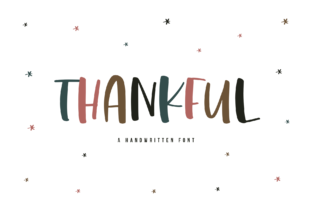
Why the Thankful Font Feels Like a Warm Hug for Your Designs
There’s a certain magic that happens when you find a typeface that just gets your project. It’s not about the most complex ligatures or the trendiest geometric shapes. Sometimes, the perfect match is a font that feels approachable, genuine, and full of character. That’s the immediate impression you get with the Thankful font. It’s a cute and chunky handwritten font with smooth, bold letters that feel less like cold digital text and more like a friendly note written by hand. This isn't a font trying to be edgy or ultra-minimalist. Its strength lies in its warmth and its ability to inject a dose of authentic personality into any creative work, from a small business logo to a heartfelt wedding invitation.
The Personality Behind the Pixels
What exactly makes a font like Thankful stand out in a sea of thousands of typefaces? It comes down to a few key visual traits that work in harmony. First, the chunky weight gives it a confident, substantial presence. This isn't a delicate script that might get lost on a busy background; it holds its own, making it ideal for headlines and short bursts of text where impact matters. The smooth, rounded edges of each letterform soften its boldness, preventing it from feeling heavy or aggressive. Instead, it feels friendly and inviting—like a well-loved stuffed animal or a cozy blanket.
The handwritten quality is carefully crafted to feel organic without being messy. Each letter has just enough variation to feel human, but it maintains a consistent baseline and spacing that ensures it remains highly legible. This balance is crucial. Too much imperfection can make a font feel amateurish or difficult to read, especially at smaller sizes. Thankful threads that needle perfectly, delivering personality without sacrificing clarity. It’s a typeface that communicates joy, gratitude, and approachability at a glance.
Where Thankful Truly Shines: Practical Applications
The real test of any creative asset is how well it performs in the real world. A font’s value is measured by its versatility and the specific problems it solves for designers, creators, and business owners. Thankful is a workhorse for projects that need a human touch. Let's break down some of its most effective uses.
Building a Brand with Heart
For small businesses, especially those in the lifestyle, wellness, children's products, or artisan food spaces, brand identity is everything. You’re not just selling a product; you’re selling a feeling, an experience. Thankful can become the cornerstone of a brand’s voice. Imagine it on a logo design for a local bakery—it instantly communicates homemade quality and care. Used on packaging design, it can turn a simple box or label into a personal message from the maker to the customer. When paired with a clean sans serif font for body text, it creates a beautiful contrast that is both professional and deeply personal. This kind of thoughtful font pairing builds visual consistency across all touchpoints, from the website to the product hang tag, strengthening brand recognition with every interaction.
Digital Engagement and Social Media
In the fast-scrolling world of social media, stopping power is essential. A display font like Thankful is perfect for creating eye-catching social media graphics. Use it for Instagram quotes, Facebook ad headlines, or Pinterest pin titles. Its bold, cheerful nature makes text instantly readable even on a small phone screen, which is a huge win for audience engagement. For bloggers, it’s a fantastic way to style post titles or pull quotes, adding a layer of visual interest that complements your writing style. It can also be a great choice for the header font on a website, setting a welcoming tone from the moment a visitor lands on your homepage.
Tangible Projects and Physical Goods
The charm of Thankful extends beautifully into the physical realm. For crafters and hobbyists, it’s a go-to for projects that are meant to be given as gifts or sold at local markets. Think custom t-shirt designs with uplifting phrases, personalized mugs, or tote bags. For event planners or individuals designing invitations, it adds a bespoke, heartfelt feel to wedding suites, baby showers, or birthday parties. It’s also incredibly effective for poster design, especially for community events, farmers' markets, or children's school projects where a friendly, approachable vibe is more important than corporate sterility.
Professional and Commercial Design Assets
Beyond personal projects, Thankful serves as a valuable tool in a designer’s toolkit for commercial work. In editorial design, it can be used sparingly for chapter titles or section headers in a magazine or book to add a moment of warmth. For marketing assets like email newsletter banners or promotional flyers, it helps create a cohesive and engaging visual campaign. As a premium font, it often comes with additional styles—perhaps alternates or a set of swashes—that give designers more creative flexibility to avoid repetition and customize the look for different clients.
Making It Work: Practical Tips for Using Thankful
Finding a great font is step one. Knowing how to implement it effectively is what separates good design from great design. Here’s how to get the most out of Thankful.
1. Pairing for Contrast and Balance: Never use a handwritten font like Thankful for long paragraphs of text. Its charm becomes its weakness, leading to visual fatigue. The golden rule is to pair it with a simple, highly readable serif font or sans serif font. For example, use Thankful for your main headline, and a font like Lato, Open Sans, or Merriweather for the body copy. This creates a clear hierarchy that guides the reader’s eye and makes your content easy to consume.
2. Prioritize Readability: Always test your chosen font at the actual size it will be used. Thankful’s bold weight is great, but if you make it too small, the details of its handwritten style can get lost. Use it for larger text elements—titles, subheads, call-to-action buttons, or short quotes. Ensure there is enough contrast between the text color and the background, especially in web design, to meet accessibility standards.
3. Understand the License: If you’re using Thankful for a commercial project—which includes anything for a business, a client, or items you plan to sell—you must ensure you have the correct commercial font license. This is a non-negotiable part of professional practice. The license will outline what you can and cannot do with the font, so read it carefully. Using a font without proper licensing can lead to legal issues and undermine the professionalism of your work.
4. Explore All the Styles: A well-designed typeface often includes more than just the basic letters and numbers. Check if Thankful comes with stylistic alternates, ligatures, or multilingual support. These extra features can be used to customize words, giving your designs a unique, hand-lettered feel that sets them apart from others using the same font. It’s these details that elevate a project from good to exceptional.
Ultimately, choosing a font is a creative decision that should align with the story you want to tell. Thankful isn’t the right choice for a law firm’s annual report or a tech startup’s investor deck. But for the countless projects that aim to connect on a human level—to spread joy, encourage kindness, or simply make someone smile—it’s an invaluable design asset. It’s a tool that doesn’t just display words; it helps you communicate a feeling. And in a world saturated with sterile, impersonal communication, that kind of authentic warmth is something to be truly thankful for.